
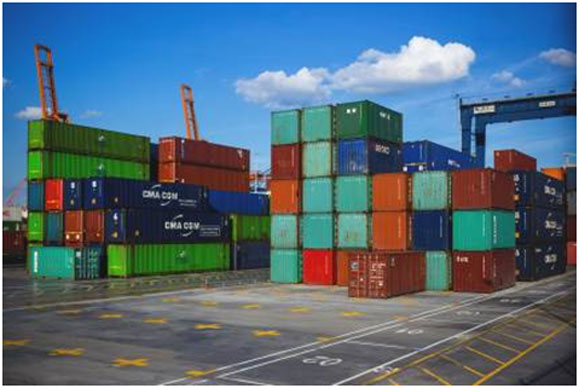
Moving commercial cargo by water is one of the oldest forms of trade. Raw materials, manufactured products, and liquids and solids travel by ships, barges, and boats. Each vessel must have a crew, whether it be a barge moving down the Allegheny River with coal, a towboat transporting grain along the Sacramento River, a supertanker moving in the Gulf of Mexico, or a container ship loading in Mobile, Alabama. Domestic shipping involves travel over the rivers, bays, lakes, and coastal waterways, while deep-sea ships traverse the sea lanes of the world.

Unfortunately the maritime shipping industry in the United States is experiencing serious problems. The number of United States flagships declines annually. This has had a serious negative effect upon maritime employment. Some seamen are able to obtain only four months of employment a year. On the Great Lakes only about one-half of the ships remain actively engaged in commerce. On the inland waterways there exist surplus barges. The expansion of container ships has greatly affected employment. For example, a large modern efficient container ship with a crew of twenty-one people can replace four smaller ships each with a crew of forty!
Naturally, shipping is affected by world economics; United States flagships, despite a magnificent record of reliability and safety, have difficulty competing with the ships of other nations. The latter pay their crews considerably less.
Although the United States fleet no longer occupies a preeminent position in world shipping, it maintains a position of leadership in maritime technology generally, and safety developments specifically.
Recently the world has seen the launching of such amazing new ships as supertankers and LNGs, liquefied natural gas carriers. The late Paul Hall, former president of the Seafarers International Union, explained the situation: "Our industry is in the midst of a major technological revolution... We are faced with the problem of crewing radically different ships like the LNG carriers-ships that require new and expanded job skills or proper manning."
Employment opportunities for young people without skills are rapidly disappearing; fortunately, several schools exist to train crew and officers for these new ships and for cruise ships.
The United States has been a commercial trading nation with a long and successful tradition. Even now that the ocean-shipping pace has slowed, our ships have an excellent record for reliability, safety, and environmental protection.
See the following articles for more information:
- Find Your Calling: A Checklist
- 5 Ways To Build Your Career Outside of the Office
- How To Impress Your Interviewer When Making a Career Change
- 5 Tips For Successful Networking
